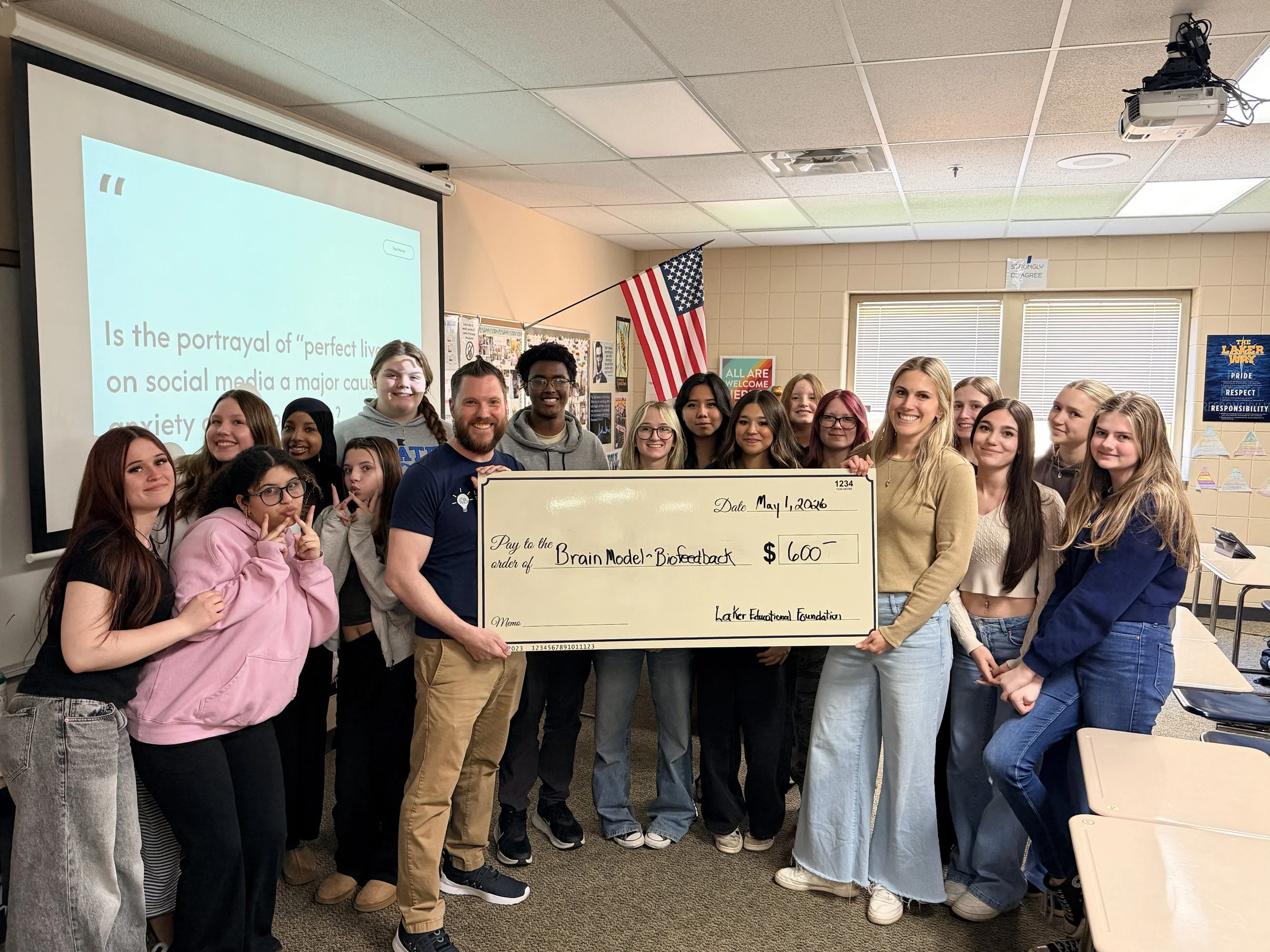
Laker Educational Foundation received an overwhelming number of grant requests this spring.
Thank you to all for taking the time to submit your requests.
We are pleased to announce that we were able to fund approximately half of the applications received.
We look forward to spring 2027, when we will once again be accepting applications.
Crash the Classroom (2026)
The Laker Educational Foundation Grant Team “crashed the classroom” to surprise educators across Prior Lake-Savage Area Schools—awarding over $20,000 in grant funding to support innovative programs and student success.
Congratulations to all of our grant recipients! 🎉
Not sure who had more fun….the students, the staff or the LEF Grant Team!
Did you know…
Since 2005, LEF has granted over $330,000 to PLSAS.
This grant cycle places special emphasis on proposals that highlight technology integration, mental health and wellness programs, diversity and inclusion initiatives, and creative arts projects. We believe these areas are essential for fostering a well-rounded and supportive educational atmosphere.
For all our past awarded grants, click here
Our Spring 2026 Grant Recipients
Time Management & SEL Supports
$500 Awarded
Student anxiety—driven by academic pressure and social stress—is the top reason for counseling visits, often disrupting learning. Many students also lack basic organization skills due to missed foundational learning during the pandemic.
To address this, the proposal requests funding for academic planners and social-emotional coloring resources. These tools support two key areas:
1. Executive Functioning
2. Emomtional Regulation
Co-Taught Tiered Book Choices
$500 Awarded
In a 9th-grade co-taught English class, students have a wide range of reading levels, making it difficult to provide accessible, engaging books for all—especially ones that are readily available. The first quarter focuses on building a love of reading, but current resources are limited.
The proposal requests funding for a class set of high-interest books at varying reading levels so all students can find something accessible and engaging.
Inclusive Yoga for Lifeskills
$2,000 Awarded
The growing LifeSkills program faces challenges with student self-regulation, which limits participation in learning due to sensory, motor, and social/communication needs.
The proposal introduces an adapted yoga program designed specifically for these students, integrating sensory, motor, and emotional supports into daily routines. The program will train both students and staff, aiming to improve regulation, increase participation, and support smoother inclusion in general education settings.
Brain Model and Biofeedback Tool
$600 Awarded
Psychology students struggle to understand abstract concepts about the brain, behavior, and mental health due to a lack of hands-on, visual learning tools.
The proposal requests funding for two resources:
A detailed, interactive brain model to help students better understand brain structure and function
A biofeedback device (Muse 2 headband) to demonstrate real-time brain activity and support mindfulness practice
These tools aim to make learning more engaging and concrete while helping students connect physiological processes to mental health and stress management.
The Strategic Language Lab
$485 Awarded
Multilingual (ML) students often experience anxiety that limits their willingness to speak English, and traditional instruction (grammar drills and role play) doesn’t prepare them for real-world conversation.
The proposal introduces a Strategic Language Lab, using a mobile gaming station with culturally diverse, high-interest games paired with sentence supports. These games encourage authentic, collaborative communication across all language proficiency levels.
Flexible Seating for EBD Classroom
$3045.92 Awarded
Students in a center-based EBD classroom need a highly structured environment that supports emotional regulation, attention, and positive peer interaction. Current classroom furniture is rigid, uncomfortable, and not durable enough for student needs, which contributes to off-task behavior and reduced engagement.
The proposal requests funding for flexible, durable classroom furniture that allows for movement, choice in seating, and both independent and small-group learning. These updated furnishings are designed to reduce sensory and behavioral triggers while supporting a calmer, more inclusive learning environment.
Learning the Art of Annotation
$1553 Awarded
Spanish Immersion students currently read from digital copies, which makes real-time annotation difficult and increases distractions, limiting comprehension and engagement.
The proposal requests funding for physical class sets of two books, allowing students to annotate directly in the text using tools like sticky notes. This supports stronger close reading and literacy skills in Spanish.
Family Resource Bags
$1,000 Awarded
The project proposes creating Family Resource Bags to help parents and caregivers support young children’s development in areas like social-emotional skills, behavior, routines, and school readiness.
Each bag will include parent guides, children’s books, tip sheets, and hands-on activities to encourage learning and positive interactions at home. The program is designed to be accessible and equitable, offering free, culturally responsive materials for diverse families, including multilingual learners and children with varying needs.
Unified Coffee Cart
$1,300 Awarded
Students in center-based special education programs often have limited opportunities to interact with peers, which can lead to isolation and fewer real-world learning experiences.
The proposal introduces a Unified Coffee Cart, where students with and without disabilities work together to prepare, market, and deliver drinks and snacks to staff. This creates meaningful opportunities for inclusion, collaboration, and hands-on learning.
Laker LAUNCH Transition Program
$2,321 Awarded
PLSAS is launching the Laker LAUNCH 18–22 Program, a transition program for young adults with disabilities focused on building skills for independent adult life. The program emphasizes whole-student wellness and is grounded in key areas like employment, independent living, and community participation.
A major focus of this grant is recreation and leisure, an often-overlooked area that is essential for mental health, social connection, and quality of life. The program aims to provide inclusive, adaptable opportunities for students to explore hobbies, build relationships, and engage in their communities
Reliable Device Access for Student Learning
$300 Awarded
Special Education students rely heavily on iPads for learning and accommodations, but uncharged devices—often due to executive functioning challenges—create barriers to participation.
The proposal introduces classroom charging stations to ensure consistent access to fully charged devices. This will improve engagement, task completion, and access to supports, while also helping students meet academic and IEP goals.
The approach is innovative because it goes beyond equipment by creating a structured, school-wide system that teaches students organization, responsibility, and routine. This proactive system reduces disruptions and allows teachers to focus more on instruction rather than troubleshooting device issues.
Adapted Books for Lifeskills Classes
$1192 Awarded
Students in K–5 Lifeskills classrooms who use AAC or have significant physical and developmental needs often struggle to access traditional picture books, limiting opportunities for shared reading and literacy development.
The proposal requests funding to create a library of adapted children’s books for Speech-Language Pathologists to use in Lifeskills classrooms. These books will be modified to better support accessibility and engagement through tools such as picture symbols aligned with AAC devices, tactile elements, page-turning supports, simplified text, and supplemental communication materials
PLSAS Community PowWow
$1500 Awarded
Prior Lake-Savage Area Schools seeks to expand culturally meaningful learning opportunities for Native American students and the broader school community through a district-supported Powwow event.
The event will serve approximately 300 students, staff, and community members and builds on the success of a previous Powwow. It aims to strengthen belonging for Native students, increase cultural awareness and empathy, and support district goals around inclusion and engagement.
The Powwow will include collaboration with Native cultural leaders and feature traditional drumming, dancing, and educational experiences, along with classroom learning beforehand to prepare students. The overall goal is to create a shared, authentic cultural experience that deepens understanding and strengthens community connection.
Novel Purchases
$316.65 Awarded
This project aims to increase student engagement and reading achievement by adding high-interest, diverse novels to a middle school classroom library.
The goal is to provide books that reflect the student population and motivate students to read more independently, which research shows improves reading performance and assessment outcomes. The books will be permanently added to the classroom library for ongoing use.
As a reading interventionist, the teacher frequently supports students and staff across classrooms with book recommendations. These resources will be used for independent reading programs, where students track their reading based on teacher-designed expectations.
Motor Room for Setting III Students
$3500 Awarded
The CID special education program serves middle school students with significant cognitive, behavioral, sensory, and developmental needs, many of whom struggle with regulation that impacts their ability to learn and participate in school.
Currently, there is no dedicated motor or sensory space for these students, forcing staff to manage dysregulation within classrooms or hallways, which disrupts instruction and limits effectiveness.
The proposal requests a designated motor room to provide structured sensory and movement-based supports. This space would help students improve self-regulation, focus, emotional control, and motor development, allowing them to better access academic and life skills instruction.
Our Spring 2025 Grant Recipients
Communication Boards
$330.00 Awarded
This project aims to install communication boards in all gym spaces, the cafeteria, and pod areas to enhance communication access for students with speech and language challenges. These boards will provide visual supports with symbols and words, allowing nonverbal and minimally verbal students to express their needs, participate in social interactions, and engage in activities more independently.
German Classroom Library
$250.00 Awarded
The German department does not have enough age-appropriate German novels to offer our students a library for silent, independent reading time (like the Spanish department offers). Our hope is be able to buy 30 copies of interesting books, so that all of our students can enjoy this very important skill. All students in German classes will benefit.
Quizizz Enhancement for Social Studies
$216.00 Awarded
The intent of this request is to enhance educational opportunities for our diverse student population by providing myself with a great student engagement resource that fosters academic success and personal growth. This resource is designed to address the unique needs of students with various levels and abilities.
9th Grade Compass
$292.50 Awarded
A large part of our 9th grade Compass program is taking time out the first weeks/months of school and working on building relationships and connections throughout our 9th grade classes and across the building. We have tried and true activities that have worked in building these connections and would like to have supplies that we can continue to use year after year in Compass, with our 9th grade students. We know coming into a building of this size can be intimidating for our 9th graders and these activities really help with students learning about the building and how to start of strong in high school. Data shows that if students do well and feel connected their 9th grade year they continue to do well. We have three specific activities we have used for this. All are tied to data driven and approved social/emotional learning activities that are age appropriate. One is helping students to build relationships across this building as they enter into 9th grade and the other two are tied to building peer to peer relationships during our 9th grade orientation and "foundation week". In the past we have relied on various department funds or using our own money and neither of these options are sustainable for continued use from year to year. This would allow us to have these on hand and reuse them year after year with incoming 9th graders.
Enhancing Play Based Learning
$500.00 Awarded
In conclusion, play-based learning is vital for fostering social, emotional, and cognitive development in life skills students within a center-based special education classroom. Updating classroom materials isn’t just an aesthetic improvement – it’s a necessary step in providing these students with the tools they need to succeed. By investing in new resources, we are helping them build essential life skills in an environment that nurtures their unique needs and capabilities. Outdated resources are insufficient, and the purchase of modern materials is an investment in the future success and well-being of these students.
STEM-tastic Learning Bins
$308.50 Awarded
My 5th grade students are curious, hands-on learners who love to explore, build, and create. With STEM learning bins, they will have the opportunity to develop essential problem-solving skills through exciting challenges in engineering, math, and science. These bins will be filled with materials like building blocks, magnets, circuits, and other interactive tools that encourage teamwork, creativity, and perseverance.
This grant will support our bilingual learners by ensuring access to STEM resources and Spanish-language books and materials that strengthen both scientific literacy and language development. Incorporating STEM texts in Spanish will help students build vocabulary, strengthen comprehension, and connect scientific concepts to real-world applications in their second language. With these resources, my students will be able to experiment, design, and discover—helping them build confidence in STEM and inspiring them to become the innovators of the future!
Library Collection Enhancement Proposal
$858.00 Awarded
The PLSAS strategic plan prioritizes academic excellence, optimize resources, and positive learning environment. Our media center plays a crucial role in achieving these objectives by offering relevant and up to date material. However, two specific areas of our collection require updates due to outdated materials and students needs:
1. Spanish-Speaking Countries Collection
o First-grade students conduct annual research on the 21 Spanish-speaking countries, exploring culture, population, customs, history, and industry.
o Students create informative posters based on their research, which are shared in classrooms and community spaces.
o The library supports this project by providing books for research, but the average publication date of our current collection exceeds 10 years, with some books over 20 years old. Updated resources will provide more accurate and engaging content for student learning.
2. United States Collection
o Our fourth-grade students complete a state research project, compiling facts on capitals, industries, populations, flags, and key landmarks.
o These projects encourage deeper engagement with geography and social studies.
o The most recent books in this collection were published in 2003, and several state books have been lost over time, leaving gaps in our collection.
12th Grade Diversifying Book Choices
$500.00 Awarded
General level English 12 students come from a variety of backgrounds, but many plan on attending a 2 or 4 year school after graduation. Throughout schooling, many students do not experience a novel that provides a narrator that looks like them OR provides an experience different than their own lives. We would like to increase and diversify the number of novels we are able to offer students during our Book club unit in English 12. This will help us replace novels lost during COVID and add additional texts to meet the needs and identities of our students for the 25-26 school year. By reading high interest texts from diverse authors/genres, students will:
-Gain Empathy (reading is the number 1 way to gain empathy for those around you)
-Research proves that independent reading benefits you and your future goals
-Reading is the only way to get better at reading
-Reading is linked to overall academic and economic success
Student Wellbeing with Digital Clocks
$256.50 Awarded
The intent of displaying digital clocks throughout our elementary building—including hallways, the cafeteria, and the gym—is to enhance time awareness, promote independence, and support structured routines for all students. Digital clocks provide a clear, accessible, and easily readable format, benefiting students of all abilities, including those who struggle with analog clocks, time management, or executive functioning.
Who Benefits?
All Students: Improves time awareness and supports daily transitions.
Students with Disabilities: Aids those with learning differences, executive functioning challenges, and time-processing difficulties.
English Language Learners (ELLs): Provides a universally understood numerical format for telling time.
Teachers & Staff: Helps reinforce structured routines and transition expectations.
By integrating digital clocks throughout the school, we create a more inclusive, supportive, and structured educational atmosphere, fostering confidence, independence, and overall student success.
German Free Library
$250.00 Awarded
The acquisition of a second language is best achieved by providing language input that is comprehensible and of interest to students. Proficiency is achieved by repeated exposure to language. The German department is the only World Language that does not have sufficient numbers of appropriately leveled novels to start a Silent Sustained Reading component to the curriculum. It is desirable that every student has access to novels for weekly reading periods. The implementation of Free Voluntary Reading (or SSR) distinctly supports the High School SAG goal of increasing the percentage of students who are at Meets ACT BenchMark Readiness Integration of Knowledge and Ideas in reading.
HS Calming Room Update
$862.50 Awarded
In collaboration with occupational therapists, special education staff, and an interior design class, we are redesigning our calming break room to better support students' needs. Currently, students are refusing to access the designated area as they note it feels “sterile”, “uninviting” and doesn’t support regulation. Many students have individual education plan (IEP) goals around finding strategies and identifying tools and supports for self-regulation and our break room is not one of the current tools being identified by students as a resource. We want to support students' emotional and mental well-being and provide a safe space and environment as they work through adolescent struggles and situations.
We have 22 students within our center-based program that have developmental, neurological, trauma, and medical conditions. We want to provide a space that invites them to process through setbacks and struggles and allows them access to a welcoming space and sensory tools that can support this dire need. We hope that in creating a more calm visual and organized environment that provides a variety of sensory and regulation tools, students will want to access this space and feel more comfortable in the school environment that is highly challenging for this population of students with diverse and special needs.
Mud Kitchens and Supplies
$500.00 Awarded
Last year, a courtyard space in our building was cleared and pea rocks were put down in this area. Students and classes use this space but not on a consistent basis. The addition of some mud kitchens and supplies would greatly increase the use of this area and would be a benefit to the multiple early learning programs here at Edgewood. Mud kitchens allow children to experiment with simple natural materials in infinite combinations, providing endless opportunities for nature-centered play and learning. By combining scientific exploration and art, mud play cultivates children’s independence, creativity, and curiosity. Mud kitchens help children learn cooking processes and vocabulary modeled by the teacher. Any student at Edgewood would be able to use this mud kitchen during their outside time (which generally happens daily). Making and eating food or pretending to-is universal and bridges and connects families and cultures.